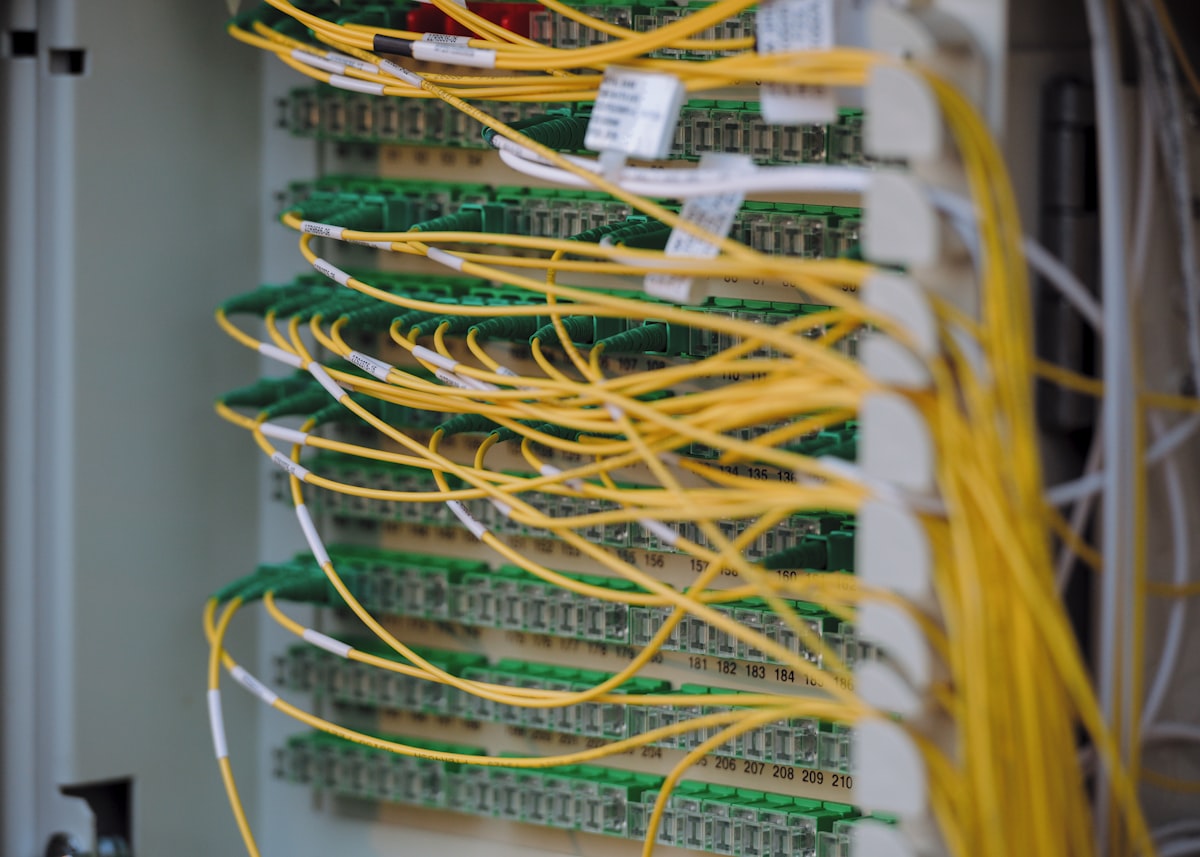
Canada's federal government has committed $2 billion over five years to break university dependence on US-controlled AI infrastructure. The mechanism it chose to do that includes a $300 million fund that explicitly lets researchers buy GPU hours from Amazon and Microsoft.
That's not a contradiction buried in the footnotes. It's the architecture.
The Allocation Gap Nobody Puts in the Press Release
Start with the actual supply. The Digital Research Alliance of Canada's 2024 Resource Allocation Competition — the annual process by which Canadian universities request sovereign compute — distributed 4,237 Reference GPU units nationally across all five host sites for the entire year. One year. All of Canada. Every university, every research group, every grad student running a model.
For context: a moderately serious LLM fine-tuning run can consume hundreds of GPU-hours in a single afternoon. The national sovereign GPU pool, spread across institutions from Victoria to Halifax, wouldn't cover a week of serious training workloads at a mid-sized AI lab.
The Alliance's own 2024 RAC results show the system met only 43% of CPU resource requests nationally — down 5 percentage points from the prior year. CPU is the commodity resource. GPU is the scarce one, and the Alliance doesn't publish a fulfillment rate for it because the gap is too wide to present as a percentage.
This is the structural condition that existed before the June 2024 federal-provincial announcements, and it's the condition those announcements were designed to address.

What Burnaby and Victoria Actually Received
The June 2024 investments were real and consequential. The Digital Research Alliance awarded SFU $41.5 million to upgrade Cedar, its national supercomputing node in Burnaby. The BC Ministry of Jobs, Economic Development and Innovation co-invested $24.6 million alongside that. UVic's Arbutus Cloud received $10.3 million from the Alliance and $6.1 million from the province. Combined, BC institutions absorbed roughly $82.5 million in a single funding cycle.
SFU's Fir supercomputer — the machine that came out of Cedar's renewal — was installed in September 2025 and ranked 78th on the global TOP500 list. It is currently the only Canadian academic system in the world's top 100, per HPCwire and SFU's own communications. That is a genuine achievement worth stating plainly.
But Canada remains the only G7 country without a supercomputer in the global top 30, a fact Queen's University cited in its formal support for the federal Sovereign Compute Infrastructure Program. Fir is the best Canada has, and it sits outside the tier where frontier AI training actually happens.
Budget 2025 added $925.6 million specifically for large-scale sovereign public AI infrastructure, per the Department of Finance Canada. The competitive SCIP program is supposed to procure a machine that changes that ranking. It hasn't been deployed yet.
The $300 Million Problem Inside the Sovereign Strategy
Innovation, Science and Economic Development Canada structured the Canadian Sovereign AI Compute Strategy across three pillars: up to $200 million to augment existing public infrastructure like the Alliance-managed systems at SFU and UVic; up to $1 billion for a new large-scale sovereign supercomputer through SCIP; and up to $300 million in an AI Compute Access Fund for researchers and small businesses.
The Access Fund launched in March 2025. ISED designed it explicitly to let Canadian researchers and SMEs purchase GPU compute from "existing providers" — a category that includes Microsoft Azure, AWS, and Google Cloud.
The thesis of Canada's sovereign compute strategy is that reliance on US-controlled AI infrastructure is a national risk worth spending $2 billion to reduce. The mechanism of the Access Fund is federal dollars flowing to Microsoft and Amazon datacenters, most of which sit in Virginia and Oregon. Both things are simultaneously true, and neither ISED nor the Alliance has publicly reconciled them.
The Digital Research Alliance received $85 million for 2025 to 2027 to advance national digital research infrastructure, per its own news release. Separately, the Alliance's National AI Compute Rapid Deployment initiative committed $40 million in capital for 2025-26 to install dedicated AI GPU clusters at seven national host institutions. SFU is among them. The money is moving. The sovereign supply is growing. It is not growing fast enough to close the gap before the Access Fund routes federal dollars to hyperscaler billing accounts.

UBC's Hybrid Cloud Is Not a Stopgap
UBC's Advanced Research Computing unit formally offers researchers access to Microsoft Azure through a UBC Hybrid Cloud Service, per UBC ARC's official website. This is not a shadow IT arrangement or an emergency workaround. It is procurement.
Once a research group builds its data pipelines, model checkpointing workflows, and grad student onboarding around Azure's toolchain, migrating to sovereign infrastructure becomes a project that no one executes mid-grant. The switching cost isn't technical — it's temporal. A PhD student with 18 months left on their funding timeline is not going to rebuild their training environment to run on Fir's job scheduler when Azure is already working.
A researcher at one BC university who asked not to be named described the situation directly: "We applied for Alliance allocations for two consecutive years and got a fraction of what we needed both times. We moved to cloud. Now that's just how we work."
The data-residency question has a specific legal texture that most coverage flattens. Canadian federal research funded through NSERC and CIHR requires data management plans under Tri-Agency policy but does not uniformly mandate Canadian data residency across all research categories. BC's Personal Information Protection Act creates stricter obligations for certain data types, particularly in health research. But a substantial portion of AI training workloads at BC universities involve publicly available datasets or data categories where US-cloud storage is technically compliant. UBC can offer Azure access without triggering an immediate regulatory crisis. The sovereignty risk is real but diffuse — it accumulates in aggregate dependency and surfaces acutely only when sensitive datasets are involved.
Second-Order Effects the Funding Announcements Won't Track
The structural consequences of the current arrangement extend beyond the institutions themselves:
- BC AI spinouts emerging from UBC, SFU, and UVic research pipelines are carrying undisclosed Azure and AWS infrastructure lock-in into their early fundraising rounds. This is a due diligence question almost nobody is asking at the term sheet stage.
- SFU's Fir team now competes for researcher workloads against subsidized commercial cloud access funded partly by Ottawa's own Access Fund.
- Graduate students building careers around hyperscaler certifications and toolchains are not building expertise in sovereign HPC systems — a talent pipeline problem that compounds over a decade.
- The $300 million Access Fund creates a federal price floor for commercial GPU hours, which reduces hyperscaler incentive to negotiate better data-residency or IP terms with Canadian institutions.
- BC health-data AI research faces escalating compliance friction as US-cloud dependency collides with provincial privacy obligations that are only becoming stricter.
The contrarian case — and it deserves a hearing — is that hybrid compute models are how mature research ecosystems operate everywhere. The US, UK, and Australia all run sovereign HPC alongside commercial cloud burst capacity. The 4,237 RGU figure sounds damning until you consider that most GPU-intensive academic AI work in Canada is still exploratory rather than production-scale training, and that chronic underinvestment in research computing staff — not capital — is the binding constraint. No amount of federal hardware spending solves a human capacity problem.
That argument is partially correct and strategically convenient for anyone who benefits from the status quo.
Vanhub Intelligence: Local Impact Analysis
According to recent market trends in Metro Vancouver, the federal sovereign compute strategy is doing something quietly consequential for the region's employment geography: it is concentrating high-value technical infrastructure — and the talent ecosystems that orbit it — in Burnaby rather than distributing them across the broader Cascadia tech corridor. SFU's Fir supercomputer sits on Burnaby Mountain, not in a Surrey innovation district or a Vancouver downtown tower. That matters for real estate absorption. The SkyTrain corridor premium that has historically attached itself to knowledge-economy anchors — think the Great Northern Way cluster near VCC-Clark, or the evolving Brentwood and Lougheed nodes — is now receiving a credible institutional signal that Burnaby remains the dominant attractor for federally backed research infrastructure. For developers underwriting mixed-use projects along the Millennium Line, that signal is worth more than a rezoning application. It suggests sustained demand for transit-proximate rental product from graduate researchers, postdoctoral fellows, and the mid-level technical staff that national compute facilities require. That demographic does not buy — it rents, and it rents at the upper-mid tier. Burnaby's rental absorption data has been tighter than the regional average for several consecutive quarters, and federally anchored employment anchors tend to be sticky in ways that private-sector tech tenancy is not.
For Vancouver homeowners and renters, the calculus is less about the supercomputer itself and more about what the $300 million cloud-credit pillar signals for where AI employment actually lands. If Canadian researchers and startups are effectively subsidized to run workloads on Azure and AWS rather than on sovereign infrastructure, the high-wage jobs that follow those workloads — MLOps engineers, cloud architects, AI product managers — are more likely to cluster in offices proximate to Microsoft's Vancouver presence and Amazon's growing South Granville footprint than around a university data centre. Downtown Vancouver's office vacancy has remained stubbornly elevated through the post-pandemic recalibration, but the sub-class of premium, amenity-rich tech space in the False Creek Flats and Mount Pleasant corridors has shown measurably tighter conditions. A policy architecture that routes Canadian AI compute spend through US hyperscalers, even partially, reinforces the gravitational pull of those hyperscaler-adjacent office nodes — which has direct implications for the commercial real estate recovery that downtown landlords have been waiting on since 2020.
Vanhub Editorial Staff notes: the structural irony embedded in this federal strategy is that BC taxpayers co-invested $24.6 million alongside the Alliance to upgrade Cedar into Fir, and the province's own AI ambitions depend on that machine being genuinely competitive — yet the $300 million cloud-credit pillar functionally underwrites the hyperscaler dependency that makes Fir's utilization rates harder to justify to Treasury Board in the next funding cycle. For BC's Ministry of Jobs, Economic Development and Innovation, that is not an abstract policy problem. It is a budget problem that will surface in the next provincial technology strategy review, and it has downstream consequences for whether Victoria continues to match federal compute investments at the current co-investment ratio. Given the current BC assessment climate — where provincial fiscal pressure is already reshaping how technology and innovation spending is prioritized relative to housing and healthcare — any signal that sovereign compute investments are being structurally undermined by the federal programs they are meant to complement will make future provincial co-investment harder to defend at the cabinet table.
Metro Vancouver operators should note that the employment implications extend into the construction and trades sector in ways that are easy to overlook. Data centre builds and supercomputer facility upgrades are among the most electrically intensive and mechanically complex construction projects in the region. BC Hydro's capacity constraints in the Burnaby-Coquitlam corridor are already a material consideration for large industrial and commercial projects, and a credible pipeline of sovereign compute infrastructure investment — if the SCIP program delivers on its mandate — would add meaningfully to the queue of projects competing for specialized electrical contractors, mechanical engineers, and permitting bandwidth at Metro Vancouver's member municipalities. That is a modest but real pressure on construction-sector wages and timelines in a regional labour market that has not meaningfully loosened despite the broader slowdown in residential starts. The compute infrastructure story and the housing construction story are drawing from the same trades pool, and that tension will become more visible if the federal SCIP procurement accelerates on its current timeline.
What the SCIP Procurement Actually Has to Deliver
The honest read of where BC universities stand: the sovereign infrastructure investments are real, they are the largest in Canadian academic computing history, and they are insufficient to absorb current demand. The gap is being filled by hyperscaler agreements that are now formalized, funded in part by federal dollars, and increasingly difficult to unwind.
The $925.6 million Budget 2025 commitment for large-scale sovereign AI infrastructure is the number that actually matters. If SCIP procures and operates a competitive sovereign cluster — something capable of putting Canada in the global top 30 — the calculus for BC research institutions changes. Queue times drop. The migration calculus shifts. The hybrid cloud dependency becomes optional rather than structural.
Until that machine exists and is running, BC universities are making rational decisions by staying on hyperscaler rails. The federal funding architecture, as currently designed, is paying for that rationality. That's the part the press releases don't say.