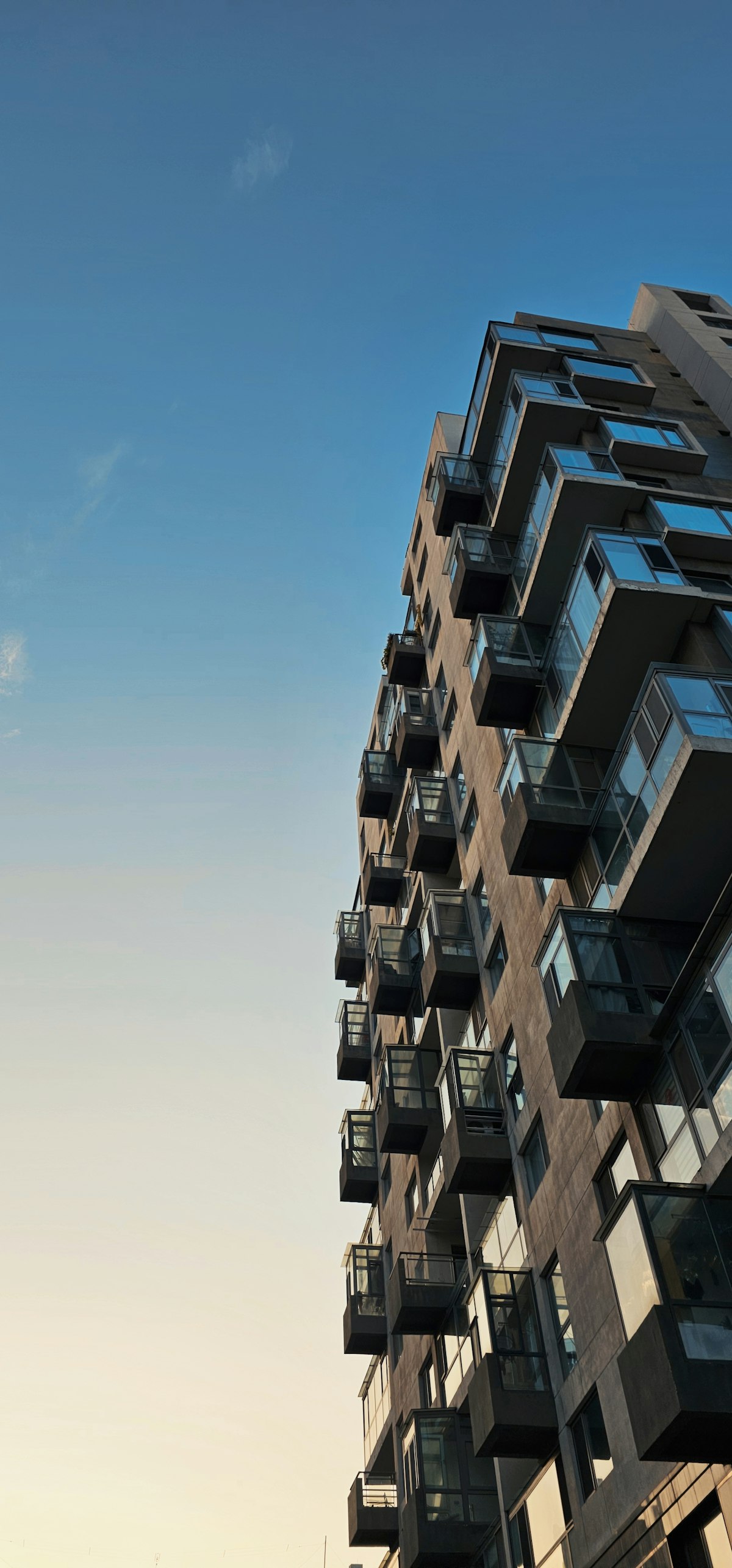
Vancouver's unsold completed condo inventory hit 5,458 units in December 2025 — one unit shy of the all-time record set in December 1995. That number, confirmed by CMHC data, is not a coincidence. It is the physical manifestation of a decision being made quietly, unit by unit, by buyers who signed pre-sale contracts at peak 2021–2022 prices and are now doing arithmetic that leads to one conclusion: forfeiting the deposit is cheaper than closing.
This is not a panic. It is a spreadsheet.
The Math Nobody Wants to Say Out Loud
Start with a real example. A buyer who signed a $920,000 Burnaby pre-sale contract in 2022 put up roughly $184,000 in deposit — the standard 20% staggered over the construction period. That unit is appraising at $700,000 to $740,000 at 2026 completion, based on anonymized case patterns documented by Rain City Properties. If the buyer closes, they absorb a $180,000 to $220,000 paper loss on day one — before property transfer tax, strata fees, and carrying costs that, according to CMHC's 2025 report on condominium apartment market risks in Toronto and Vancouver, have risen 29% since 2022 while average rents moved only 12% over the same period.
Walking away and eating the deposit is, in pure expected-value terms, the less bad option.
The banks are doing the same math. When a completion appraisal comes in $180,000 below contract price, the chartered lender's loan-to-value calculation breaks. The buyer must inject fresh equity to bridge the gap — equity most of them don't have after three years of rate hikes — or the bank declines the completion mortgage outright. OSFI's mortgage stress test, which requires qualification at the contract rate plus 2% or a 5.25% floor, compounds this. Buyers who qualified at 2021 rates and purchase prices frequently cannot re-qualify at today's appraised values. The bank isn't being punitive. It's following its rulebook. But the practical effect is that some buyers are being structurally forced into default even if they wanted to close.
According to CMHC's data, condo apartment unit cancellations in Vancouver were 10-fold higher in 2024 than in 2022. Vancouver condo apartment completions simultaneously hit a record 12,442 units in 2024. Those two facts together describe a market where supply arrived at exactly the moment the buyers contracted to absorb it decided not to show up.

The Legal Trap Buyers Didn't Read Carefully Enough
BC's Real Estate Development Marketing Act gives pre-sale buyers exactly seven days to rescind a contract after signing. After that, the deposit is fully forfeitable. This isn't a gray area — it was settled by the BC Court of Appeal in Tang v. Zhang (2013 BCCA 52), a binding precedent that also permits developers to sue for the full resale price shortfall, not just pocket the deposit.
One buyer learned what this looks like in practice when a BC Supreme Court judgment ordered them to pay $360,000 beyond their forfeited deposit after abandoning a pre-sale purchase — a case cited by CBC News and Rain City Properties that predates the current downturn. In today's market, where completed units are selling 15% to 25% below original contract prices according to Greater Vancouver Realtors MLS HPI data, those shortfall numbers are larger.
The exit strategy that previously softened this trap — assigning the pre-sale contract to another buyer at a modest loss — was effectively closed by the BC Home Flipping Tax, which came into force January 1, 2025. The tax, administered by BC's Ministry of Finance, applies gains on residential property including pre-sale assignments held under 730 days at rates up to 20%. Even the administrative uncertainty around how a discounted assignment transfer gets taxed was enough to freeze the assignment market through early 2025. There is no longer a next person in line. The contract holder is the last chair when the music stops.
REDMA's 7-day rescission window was designed for a different era — one where pre-sales were a niche product used by genuine end-users. The statute was never updated to reflect a market where investors were pre-purchasing entire floors as leveraged speculation vehicles. The legal framework governing billions of dollars in contracts was written for a market that no longer exists.
A Pipeline Running Dry
The default wave is not just a buyer problem. It is a developer financing problem, a construction employment problem, and — with a lag — a supply problem that will matter acutely in 2027 to 2029.
In 2025, Metro Vancouver saw only 60 project launches with fewer than 4,800 units released and an absorption rate of roughly 30%, according to Spark.re analysis cited by industry sources. That is one of the weakest pre-sale years in over a decade. Construction lenders require pre-sale absorption of at least 70% before releasing construction financing. At 30% absorption, developers are not unlocking those loans. The projects that launched in 2023 and 2024 with marginal absorption are discovering their lenders have very little appetite for flexibility.
The second-order effects compound quickly:
- Developers facing mass defaults and unsold inventory risk breaching construction loan covenants, accelerating insolvency proceedings.
- Strata corporations in newly completed towers must spread operating costs across fewer paying owners, raising per-unit fees for the buyers who did close.
- Completed units pushed into the rental pool by desperate investor-buyers are putting modest downward pressure on asking rents in specific Burnaby and New Westminster pockets — a localized effect, but real.
- Construction employment, which ran at full capacity through 2024's record completion year, is already seeing softer forward bookings as new project launches stall — a contraction that flows through to consumer spending in East Vancouver and the Fraser Valley with a 12 to 18 month lag.
- BCFSA scrutiny of developer deposit trust accounts is likely to intensify as default volumes exceed normal audit parameters.
The Metro Vancouver condo benchmark sat at $704,600 in January 2026, down 5.9% year-over-year according to Greater Vancouver Realtors MLS HPI data. That headline number understates the damage in specific projects, where original pre-sale pricing is off 15% to 25%. Downtown Vancouver new condo ceiling prices are running around $1,800 per square foot today, according to the Globe and Mail citing industry analyst Michael Berlin in May 2025 — against a pre-COVID peak where some developers were asking up to $3,000 per square foot.
The 1995 comparison embedded in the current inventory data is not accidental and not comforting. Vancouver's unsold completed condo inventory last touched 5,462 units in December 1995 — the tail end of a brutal correction that followed the late-1980s speculation boom. What followed was nearly a decade of flat-to-negative real condo prices. The market didn't snap back in 18 months. It ground sideways while carrying costs eroded investor returns.

Vanhub Intelligence: Local Impact Analysis
According to recent market trends in Metro Vancouver, the default wave is not evenly distributed across the region. It is concentrated in the projects that launched hardest and fastest during the 2021–2022 frenzy — which means Burnaby, Coquitlam, and Surrey are absorbing disproportionate pain relative to the City of Vancouver proper. Burnaby's Brentwood and Metrotown corridors saw some of the most aggressive pre-sale pricing during the peak, with developers extracting $1,100 to $1,400 per square foot on the promise of SkyTrain adjacency and a supply-constrained future. That SkyTrain premium remains real for renters — Millennium Line corridor rents are still elevated relative to the regional average — but it has not been sufficient to prevent appraisal gaps of $150,000 to $200,000 on units signed at peak. The buyer who paid $1,200 per square foot for an 800-square-foot Brentwood unit in 2022 is looking at a completion appraisal that pencils out closer to $950 to $1,000 per square foot today.
For Vancouver homeowners and renters, the calculus is genuinely bifurcated. Renters in newly completed towers are quietly benefiting from landlord desperation — developers and investor-buyers who do close are pricing rental units aggressively to minimize vacancy, putting modest downward pressure on asking rents in specific pockets of Burnaby and New Westminster. This is a localized effect, not a regional trend, but it is being felt. Meanwhile, owners in established single-family and low-rise strata neighborhoods are watching the condo correction with a mix of relief and anxiety: relief that the damage has not yet migrated meaningfully into their asset class, anxiety that a prolonged glut of completed condos will eventually compete with their own resale plans. A Burnaby mortgage broker who asked not to be named put it plainly: "The buyers calling me now aren't panicking — they've already made the decision. They want to know if there's any legal way out they missed. Usually there isn't."
Metro Vancouver operators should note that the secondary effect of mass pre-sale defaults is a construction employment contraction already beginning to show up in permit data. When developers cannot launch new projects because lenders won't fund below 70% pre-sale absorption — and absorption is running at 30% — the trades pipeline dries up with a 12 to 18 month lag. Electricians, framers, and concrete workers who were fully employed through 2024's record completion year are already reporting softer forward bookings. This flows directly through to consumer spending in East Vancouver, Burnaby, and Fraser Valley communities where construction trades workers concentrate.
Given the current BC assessment climate, there is a compounding policy irony worth flagging. BC Assessment values for 2026 are anchored to July 1, 2025 market conditions — conditions that already reflected significant condo price deterioration. Developers sitting on completed unsold inventory will see assessed values decline, reducing their property tax burden modestly, but not enough to offset carrying costs on units generating zero revenue. The speculation and vacancy tax adds another layer of pressure on the investor segment — many of whom signed pre-sale contracts in 2021–2022 with the explicit intention of holding units vacant while waiting for appreciation. That exit strategy is now triple-blocked: prices are down, the BC Home Flipping Tax closes the assignment route, and the vacancy tax penalizes sitting on empty units.
The Contrarian Case — and Where It Falls Short
A veteran Vancouver mortgage broker who has ridden three full cycles would push back hard on straight doom framing. Their argument: 5,458 unsold completed units sounds catastrophic until you note that Metro Vancouver's population grew by roughly 40,000 people in 2024 alone, and that the regional rental vacancy rate remains structurally below 2%. Developers sitting on completed inventory are already pivoting to rental conversion — a move that absorbs units without requiring a distressed sale and that qualifies for CMHC's MLI Select financing at favorable rates.
The underlying demand for shelter in Metro Vancouver has not evaporated. What is happening, this argument goes, is a violent but necessary repricing of speculative premium back to occupier value, and the market will clear faster than the 1995 analog suggests because today's immigration-driven demand is structurally different from the capital-flow-driven demand of the early 1990s.
That argument has merit — but it sidesteps the mechanism. The rental conversion pivot requires developer balance sheets that can absorb the carrying costs during conversion, lender cooperation on covenant modifications, and municipal approval processes that move faster than they historically have. None of those conditions are guaranteed. And the supply crater being engineered right now — 60 project launches at 30% absorption in 2025 — will not be filled by rental conversions of existing stock. It will show up as a genuine shortage of new units in 2027 to 2029, at which point the buyers who walked away from 2022 contracts may find themselves competing for product in a market that has corrected back past the prices they originally refused to pay.
Who Gets Left Holding the Risk
The regulatory architecture governing this crisis was built for a different Vancouver. REDMA's 7-day rescission window made sense when pre-sales were a niche product for genuine end-users. The BC Home Flipping Tax was designed to cool speculative short-term flipping — a legitimate policy goal — but its January 2025 effective date landed precisely as the first large cohort of 2021–2022 pre-sale contracts approached completion, freezing the assignment market at the worst possible moment for distressed buyers.
The BCFSA, which administers REDMA, has enforcement tools around deposit trust account compliance but no mandate to renegotiate contract terms. The regulatory apparatus is structurally incapable of providing the relief distressed buyers actually need. Any meaningful intervention would require either legislative amendment to REDMA or negotiated developer-by-developer workouts — neither of which is moving at a pace that helps buyers facing 2026 completions.
CMHC's Spring 2026 Housing Supply Report confirmed Vancouver had the highest unsold condo inventory at completion of any Canadian city in 2025. The federal agency has flagged that collapsing presales threaten the future housing supply pipeline — a warning that is accurate but does not translate into any immediate relief mechanism for the individual buyer staring at a $184,000 deposit and a $220,000 paper loss.
The open question that no government database can currently answer: how many of the 5,458 completed and unsold units already reflect silent buyer defaults not yet captured in official CMHC inventory counts — buyers who have stopped communicating with developers but have not yet triggered formal legal proceedings? The lag between a buyer going quiet and a developer filing suit is measured in months. The inventory number, in other words, may still be undercounting the damage.
Vancouver's pre-sale condo market was always a leveraged bet on future prices dressed up as housing policy. From roughly 2009 to 2022, that bet paid off consistently enough that the structure felt permanent. It was not. The buyers forfeiting deposits right now are not making an emotional decision. They are making the only rational one available to them — and the system that created their situation has no mechanism to offer them anything else.